Employment to Nowhere: How 5,400 Migrants Fell Victim to a Single Gang
27.02.2026
In other cases, a visa can be obtained:
→ at a Consulate General of the Republic of Belarus abroad;
→ through accredited travel agencies that cooperate with the consulate.
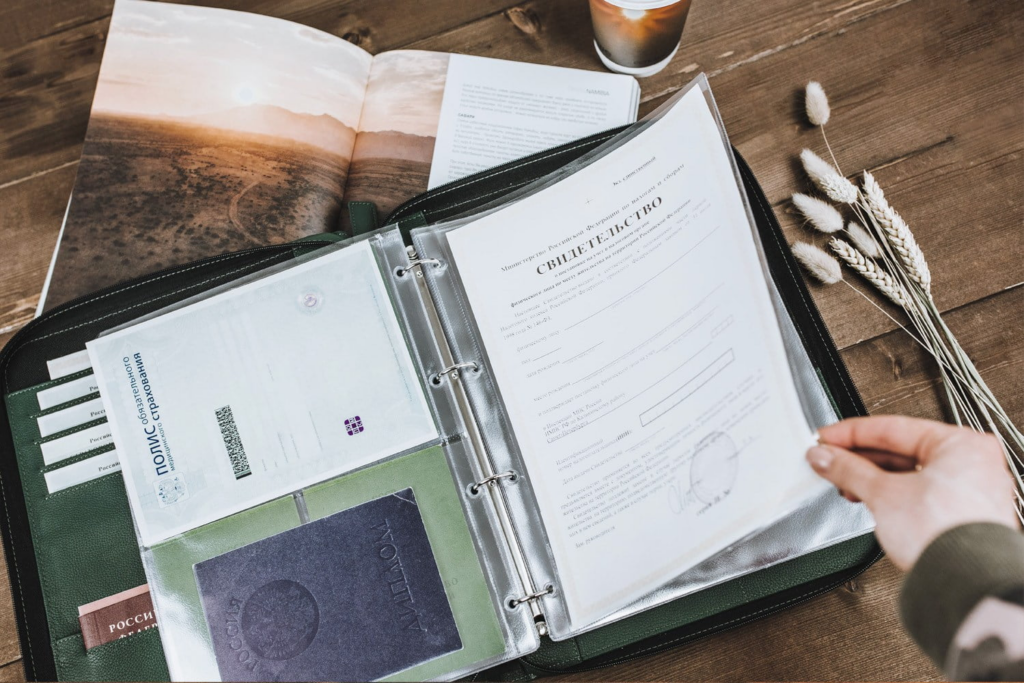
❗Important: The police clearance certificate must be issued on paper with a stamp (not in electronic form).
If you are a citizen of the Russian Federation but have lived in Latvia for more than 1 year, you need 2 police clearance certificates:
→ from the Russian Embassy in Riga (and then submitted for legalization at the Consulate of Belarus in Daugavpils);
→ from Latvia (via Latvija.lv + apostille by a sworn notary in Latvia).
For non-citizens of Latvia — a certificate only from Latvia, provided there is no second citizenship.
A certificate from Russia can also be ordered within Belarus at the Russian Consulate, but the waiting period is at least 2 weeks. Neither an apostille nor legalization is required in this case.
Validity of the certificate: 6 months.
All documents issued outside the Republic of Belarus must have:
The translation is done at a translation bureau and certified by a notary. Timeline:
→ Minsk, regional centers — 1–2 days;
→ Small towns — up to 5 days.
*Medical examinations are conducted for individuals over 14 years old.
The exam is taken at a state clinic (polyclinic) at the place of future registration. Results are valid for 1 month. Therefore, we perform this procedure last. We advise that before completing this (final) stage, you visit the OGIM and ask the inspector to check if all other documents are in order and present. If everything is fine, proceed with the medical commission, which is regulated by the following legal act:
Resolution of the Ministry of Health of the Republic of Belarus dated June 15, 2012, No. 75 “On establishing the list of diseases posing a danger to public health.”
In early 2023, the Ministry of Health of the RB, in Resolution No. 25, approved a new version of the list of dangerous human diseases. Sexually transmitted infectious diseases — syphilis and gonorrhea — were removed from the list. What is included in the list:
✔️Lassa, Marburg, and Ebola hemorrhagic fevers. These diseases have a high mortality rate and were first recorded in tropical Africa. However, given the nature of international travel, they could well appear in Belarus.
✔️Anthrax. The mortality rate, depending on the form of the disease, ranges from 10% to 95%. It is transmitted from animals. We have natural foci of the pathogen, and individual cases of anthrax are recorded from time to time. For example, in 1997 it was detected in a human, and in 2019 — in an animal (a horse) in the Brest region.
✔️Active respiratory tuberculosis. This bacterial infection remains socially dangerous in Belarus and the world.
✔️Cholera. Without qualified treatment, mortality can be 50%. There are no natural foci of cholera in Belarus; however, in the 1990s, outbreaks were noted in Ukraine.
✔️Plague. Depending on the form of the disease, mortality reaches 60–98%. Currently, a few cases of infection are noted in China, Mongolia, and adjacent regions of Siberia, as well as in Peru, Madagascar, and equatorial Africa.
✔️HIV infection is listed as a socially dangerous disease under a separate clause in Belarusian legislation.
Thus, a standard medical exam includes: chest X-ray, blood tests for HIV (some clinics additionally take a complete blood count and urinalysis), and an examination by a general practitioner (therapist).
Upon completion of the medical commission, a general certificate of health status is issued, confirming the absence of diseases included in the list of diseases posing a danger to public health. Attach the certificate to the document package and head to the OGIM.
4 photos (40×50 mm) as required for a passport of the Republic of Belarus.
(A template is available at the OGIM)
In 2026:
2 base values for the issuance of a Permanent Residence Permit (RPP)
0.5 base values for registration at the place of residence
2 base values for the Residence Permit card (Vid na Zhitelstvo)
Paid BEFORE submitting documents; the receipt is attached to the package.
Exempted:
→ children under 14;
→ persons seeking asylum;
→ investors (by decision of the Ministry of Foreign Affairs).
Conducted at the OGIM or in a specially designated office (often in the same building).
Mandatory for everyone over 14 years old.
The procedure is free and takes 10–15 minutes.
The application is filled out at the OGIM according to the established form.
It must be signed in person.
Processing times for a permanent residence permit application:
From 1 to 4 months — depending on the grounds.
Traveling abroad during the review process:
→ Possible, but only with the permission of the inspector;
→ The inspector may check your actual place of residence.