Employment to Nowhere: How 5,400 Migrants Fell Victim to a Single Gang
27.02.2026
Moving to another country is not just a change of address, but a new stage of life. For it to pass calmly and without surprises, it is important to understand the migration “ladder”: what statuses exist, how they are interconnected, and which path is right for you. You cannot simply arrive and stay — migration status directly depends on your ties to the country and the documents you can provide.
If you previously had no connection to Belarus (direct Belarusian relatives, marriage to a Belarusian citizen, etc.), the path always begins with a Temporary Residence Permit (TRP). This is the first and mandatory step. It is impossible to immediately obtain a Permanent Residence Permit (PRP), i.e., the status of a permanent resident of the country, without strong grounds — even if you plan to live here “forever.” Status is not chosen by desire: it is determined by your documents and circumstances.
The good news: the system in Belarus is transparent and step-by-step. After a temporary residence permit, you can move “up the ladder” — after 5 years, you can apply for permanent residence, and after another 5 years (optional), for citizenship. You can stop at any stage: temporary and permanent residence permits are renewed indefinitely as long as the conditions are met.
For some categories (for example, citizens of the Russian Federation), the path may be shorter — we will talk about such nuances separately.
Below is a general scheme of all statuses and how one grows out of another. Detailed instructions on the grounds for temporary and permanent residence permits are in the relevant sections.
👉THERE ARE 4 STATUSES IN BELARUS:
1.Temporary stay (tourist via visa or visa-free up to 90 days)
2.Temporary (annual) residence permit with the right of extension, grounds required (TRP)
3.Permanent residence permit (indefinite), more substantial grounds required (PRP)
4.Citizenship of the Republic of Belarus (passport)
“PMZH” is the popular name for “permanent place of residence.” In fact, this refers more to the Permanent Residence Permit (not to be confused with TRP — these are 2 different statuses ☝️). And the ID card issued on the basis of a PRP, confirming that you are now a full resident of Belarus, is called a “Residence Permit” (VNJ).
🌎 If you have not been connected with Belarus before, the simplest path is as follows:
🔸Option 1:
➡️purchase of real estate🏠 -> obtaining TRP -> after 5 years of TRP, you get the right to apply for PRP (provided you do not leave for more than 90 days in each calendar year for 5 years under TRP) -> after 5 years of PRP, you can optionally apply for citizenship (subject to renouncing others and not leaving for more than 90 days in each calendar year for 5 years under PRP).
A citizen of any state in the world has the right to buy and use real estate in the Republic of Belarus. After concluding a purchase and sale transaction, the foreigner receives a certificate of ownership and becomes the full owner of the real estate. It is important to note that foreigners in Belarus can not only buy real estate but also own it, pass it on by inheritance, or bequeath it. Land — only for lease for 49 or 99 years. After obtaining citizenship of the Republic of Belarus, these restrictions are lifted.
🔸Option 2:
➡️If there is no possibility to purchase housing (let me remind you that in Belarus there are no requirements for purchasing real estate at a certain price), then the option remains to find an employer who agrees to hire you and, based on a labor contract, issue a temporary residence permit (TRP) for a period of 1 year with the right of extension. But remember — if you quit, the TRP will be canceled because the grounds are lost. More details on this are in a separate section.
Let’s repeat once more — you can stop at any stage. Any given status can be extended indefinitely as long as you don’t grow tired of it and there are grounds.
🇷🇺 For citizens of the Russian Federation, everything is simpler. Since they have a special legal status in the Republic of Belarus within the legal framework of the Union State, they can immediately apply for a permanent residence permit without any grounds for it, bypassing the temporary stage (for the temporary stage, grounds are mandatory!).
But here you need to take into account one important nuance, which is also relevant for citizens of other countries who have their own grounds for obtaining a permanent residence permit.
After receiving the permit (it arrives by regular mail), you will be given 90 days to complete permanent registration at your place of residence (propiska). The next step will be issuing the ID card “residence permit.” If you do not manage to arrange the registration within the deadline, the permanent residence permit is canceled.
How to get a registration (propiska):
🔸Option 1: purchase residential real estate (apartment or house) as property.
🔸Option 2: be registered with relatives or acquaintances who are homeowners; they give written consent for your registration; they comply with housing space standards: in Minsk — at least 20 m² per person, in other settlements — at least 15 m² per person.
🔸Option 3: rent via an advertisement, but with the possibility of concluding an indefinite residential lease agreement and subsequent registration at the place of residence (propiska). We should note immediately that in practice this option is unlikely (especially for families with children), but such landlords are occasionally found.
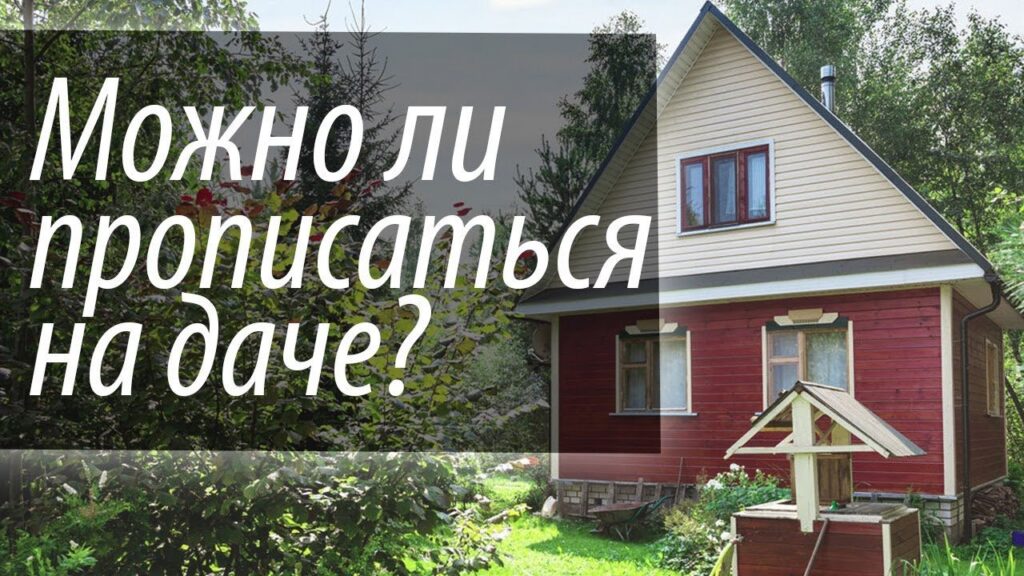
Currently, in Belarus, registration in houses within garden partnerships (SNT) is only possible as temporary registration (place of stay). For example, if you arrive in Belarus as a tourist, rent a dacha (or are invited by relatives/friends), and plan to stay for more than 10 days—requiring registration via e-pasluga.by—this is permitted.
However, permanent registration (place of residence) in such houses is not provided for under current legislation. Why? Because dachas do not fall under the jurisdiction of a specific district executive committee or village council. Simply put, road repairs, snow clearing in winter, and the improvement/development of the partnership are handled exclusively by the members of that garden partnership. Regarding amenities, water is typically turned off during winter. Furthermore, there is a lack of infrastructure—schools, kindergartens, clinics, hospitals, government offices, and public transport (mostly seasonal buses running until late October). Additionally, partnerships operate under their own charter, which must be followed, including the payment of membership fees.
Even for a Temporary Residence Permit (TRP), such houses are unsuitable. Since there is no village council in these partnerships, there is no corresponding district Office of Citizenship and Migration (OGiM).
If we are talking about buying a house in a village, town, or agrotown, the rules are completely different: village councils remain the most reliable link in the “people–government” chain. The state bears primary responsibility for roads, infrastructure, and landscaping. Here, roads are cleared in winter, streetlights are maintained, and utilities are monitored. Moreover, electricity and gas tariffs in village houses are lower than in garden partnerships because they are classified as residential real estate, with services calculated at rates for individuals. Therefore, living in a village house is more cost-effective, especially for those with permanent residence permits registered there.
❗️ Conclusion: Registration in dacha houses/garden partnerships is impossible—these objects are not considered “residential” (zhiloy), even if they are technically suitable for year-round living.
Which houses in Belarus are considered unfit for habitation and registration?
According to Belarusian legislation (Resolution of the Council of Ministers No. 1392 of 07.09.1999 and Order of the Ministry of Housing and Communal Services No. 4 of 02.05.2000), a house can be recognized as unfit for habitation in two main cases:
Important! Even if the house’s wear and tear is slightly below these values (e.g., 60%), this does not guarantee that registration (propiska) will be allowed. In addition to the wear percentage, the house must meet sanitary and technical standards.
 Utilities:
In the Yard: Conditions for Children (if any):Example: If the house has no heating or no toilet—registration will likely not be granted.
Belarus takes living conditions very seriously. If a house is dilapidated, too old, or completely without amenities, you will not be able to register in it. It is better to clarify the requirements with local authorities in advance.
If the housing is genuinely fit for life, even the cheapest village house will suffice.
Tip: If you are buying a house specifically for a permanent residence permit—choose one where the previous owners already had their registration. This means it has already passed inspection!