
Last week, two high-profile incidents occurred in Brest district, which should serve as a warning to all drivers traveling on border roads. On the nights of April 26 and 28, two young men—a Brest district resident (born 2006) and a 20-year-old Brest woman—ignored clear signals from border patrol officers to stop on Highway R-94.
This behavior is considered not just a traffic violation, but direct disobedience to an official in the performance of his official duties. Border service officers, together with the State Traffic Inspectorate, quickly identified the violators and issued administrative reports.
The main charge was brought under Article 24.3 of the Code of Administrative Offenses of the Republic of Belarus. The penalties under this article are quite severe: a fine of up to 100 basic units (equivalent to 4,500 Belarusian rubles in 2026), mandatory community service, or administrative arrest. The drivers were also charged for violating road signs requiring mandatory stopping in the border zone.
All case materials have already been submitted to Brest District Court for review. The Border Service emphasizes that its mission is not to create obstacles for civilians, but to ensure security in border areas. Control is exercised not only at the border itself, but throughout the entire so-called border strip.
Interestingly, in April 2026, two trends are simultaneously in effect in Belarus.
On the one hand, access to the border zone has been simplified for law-abiding citizens: as of April 1, the list of documents permitting entry into the border zone without the need for appropriate passes has been expanded (now these documents include pension certificates, disability certificates, student ID cards, and pupil ID cards). Furthermore, the requirement to obtain permission from border service authorities for economic and other activities in the internal waters of Belarus (rivers, lakes, and other surface water bodies whose shores are wholly owned by the Republic of Belarus) within the border zone has been eliminated.
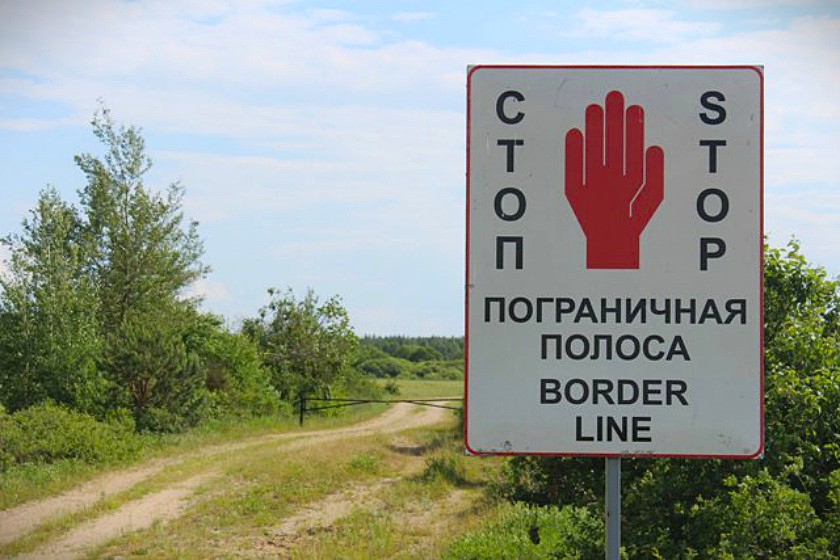
On the other hand, control over order is being strengthened: border service agencies have received additional powers to check individuals, including the right to mandatory fingerprint registration of certain categories of foreigners.
This means the government is striving to make border areas more accessible to those with legal grounds for doing so, but at the same time, it is strictly suppressing any attempts to disregard established rules. Ignoring border guards’ orders is one of the most serious offenses in this zone, which can result not only in a hefty fine but also in long-term legal trouble.
According to information from Brest Border Group.