
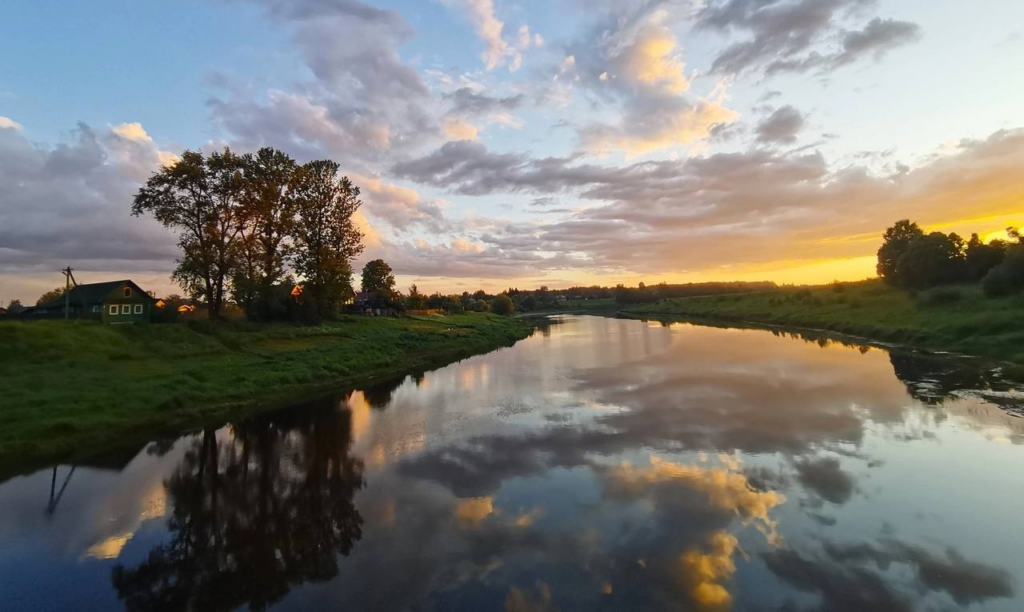
Sometimes fate takes its most unexpected turn right where the road seemed to lead in a completely different direction. This is exactly what happened to Martins, a Latvian whose car, by pure chance, turned into a quiet Belarusian village near Braslav. He was driving back from fishing on the famous lakes, but life had prepared a different, far more important meeting for him — a meeting with his own past.
A Warm Trace of Childhood
Martins had no idea that he would find himself in the very places where his distant childhood was spent, and where his grandmother Lyodya — Leokadiya — once lived. Her image, vague yet precious, was instantly resurrected in his memory: warm, rough palms, tired but infinitely kind eyes, and a melodic way of speaking in a whimsical mixture of Belarusian and Polish. He felt the coziness of her home once more: the smell of rye bread from the oven mixed with the aroma of blueberry jam on the stove, curtains on the windows breathing the freshness of meadow herbs, the scent of potato pancakes (draniki) with salt pork cracklings from a cast-iron skillet, and the incredibly cozy silence in the evenings, broken only by the purring of Chernysh the cat, who, like a guardian of love, would lie down next to the boy every night. And, of course, those lullabies — quiet, monotonous, radiating serene peace. He was five or six years old then, and summer vacations at his grandmother’s seemed like an entire eternity of happiness. But his grandmother passed away too early, and the door to that long-forgotten world slammed shut for many decades, until that very path led him to her doorstep once again.
Erased Footprints
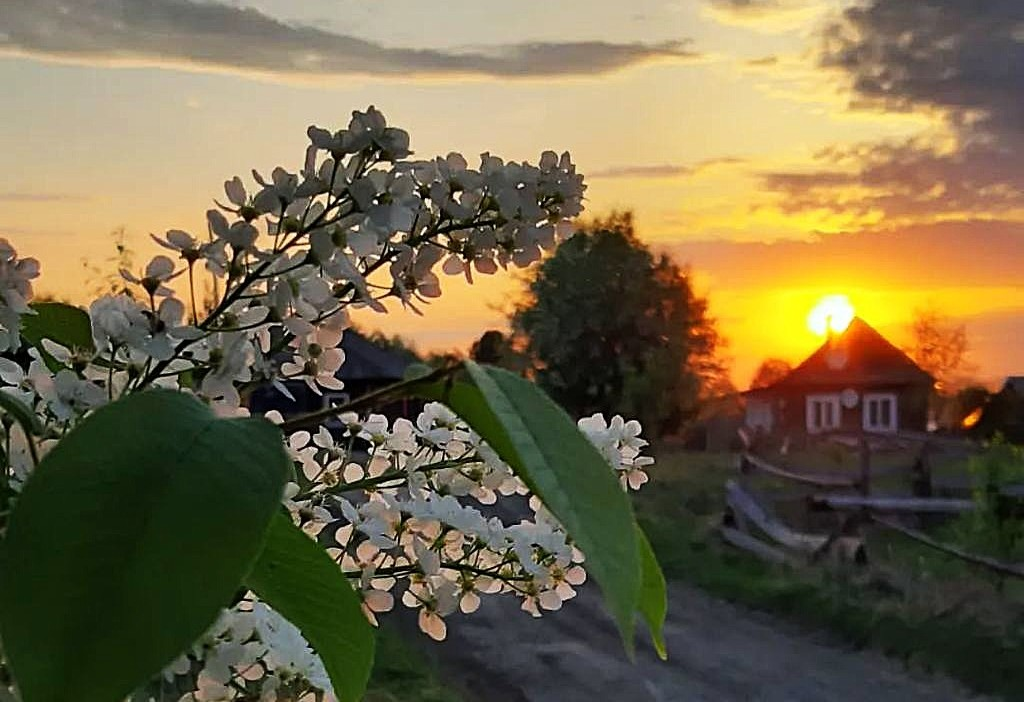
And now he stands on the spot where his earliest memories took place. But time has ruthlessly rewritten the familiar map, leaving only faint contours recognizable only by the heart. The narrow paths where children ran with buckets from the well were now drowned in lush greenery, and the lopsided old huts huddled next to elegant dachas behind new fences. On the spot where his grandmother’s house with its lilac bushes should have stood, there was a gaping wasteland, also overgrown with thick grass and wild raspberries. Martins froze in confusion, desperately trying to overlay his vivid but fragile memories onto this alien landscape. Not a single clue, not a single familiar point. It seemed the earth had erased even the footprints.
A Cup of Tea at Viktor’s
And in this moment of hollow bewilderment, when the past was finally slipping away, a local resident approached him — a gray-haired man with wise, kind eyes.
— Viktor, — he introduced himself simply, nodding toward the vacant lot. — Looking for someone? There used to be houses here, life was bustling… And now, look, a new one has begun.
— Viktor, — he introduced himself simply, nodding toward the vacant lot. — Looking for someone? There used to be houses here, life was bustling… And now, look, a new one has begun.
He invited Martins into his home — cozy, with carved window frames and a blooming garden. At a table under lush apple trees, his wife served hot tea with fragrant wild strawberry jam, crunchy bagels (bubliki), and small pies with green onions and egg. The host spoke leisurely about the village, the people, and how they live here now.
— I myself only moved back here about five years ago. From the city. My father passed away, the house was empty — my heart couldn’t take it, so I dropped everything and came here with my wife. My daughters were six and eight then… I thought they would miss the city. But they blossomed here. I have two schoolgirls — a bus picks them up every morning, everything is organized. No one complains; on the contrary, they run to the stop in the mornings like it’s a holiday.
He fell silent for a moment, as if remembering.
— In the city, my daughters were constantly sick — either a sore throat or a never-ending runny nose. Here, they’ve forgotten what a cold is. The air, the garden, the freedom… Young people rush to the city now — they say the village is boring. But I came back. And I’m not the only one: I know families who consciously move here — looking for silence, the land, their roots. And they find them.
His gaze slid across the apple tree branches above the table, and a warm smile flashed in his eyes.
— I didn’t know your grandmother Leokadiya personally, but my parents often told me about her — we were neighbors, after all. My father said she was very kind; every autumn she would come over with pear kvass, never leaving without a treat.
He ran his palm along the edge of the table as if smoothing away the years.
— Yes… Everything was different then. People lived close to each other; they didn’t put up solid fences, but turned their gates toward one another. Now you look — half the village is empty. But the land is the same, the sky is the same… Young people rush to the city now — they say the village is boring. But I came back. And I’m not the only one: I know families who consciously move here — looking for silence, the land, their roots.
He paused, took a sip of tea, and added quietly:
— You’ve returned too… And the land remembers you. It’s always waiting for its own.
The Thread That Never Broke
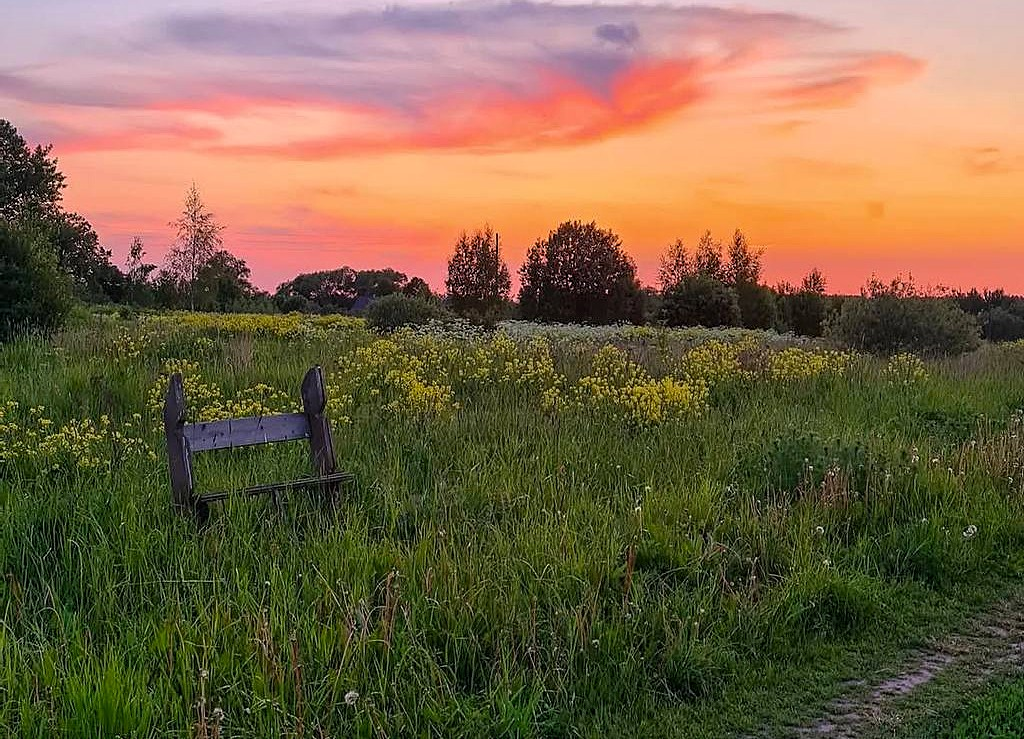
At that moment, listening to Viktor’s measured speech and feeling the warmth of the cup in his hands, Martins experienced an epiphany. Yes, the old house and familiar faces are gone. But the most important thing — the soul of this place, its quiet, caring way of life — remained unchanged. The same peacefulness, the same hospitality that he remembered from childhood. An invisible thread, which he had thought broken, suddenly tightened with new strength.
Later, analyzing his trip, Martins often returned to these feelings. He was struck not only by the responsiveness of the Belarusians but also by the general sense of order and tranquility — from the well-kept city streets to the picturesque rural landscapes. He also noticed the products in the stores — here they were always fresh, tasty, and, what especially struck him, much more affordable than back home. This everyday, solid reliability formed a complete picture — a picture of a place where one could live.
Martins discovered with surprise and joy that a whole diaspora of people from the Baltic states — and beyond — had formed in Belarus. Many move as whole families, along with children and the older generation. Here they find their community, support, and the opportunity to raise children in a stable, predictable environment. Seeing their confidence, Martins realized: this is the main evidence of faith in tomorrow.
Martins compares Belarus to a saving oasis in the modern world. A world where, in his opinion, dehumanization and “un-humaning” reign, and essentially, a war has been declared on human values. For him, Belarus has become a kind of quiet harbor — a place where one can still preserve the traditional way of life and the values he considers the foundation for a family. Talking with other resettlers, he heard similar thoughts: people are looking for a space for their children that is free from modern Western trends, which they, as parents, are not ready to accept. Their choice is a deeply personal desire to give their children an upbringing in line with their own ideas of family and tradition.
A Choice in Favor of Roots
This accidental trip turned his life upside down. Martins learned that through his grandmother’s roots, he has the right to obtain a permanent residence permit in Belarus — and over time, to become a citizen of this hospitable country. Now he is joyfully making plans to return here, no longer alone, but together with his beloved wife and children. He wants to show them this land, which so unexpectedly and warmly opened its doors to him again and became part of his family history.